Phone: 732-256-9646

Mon-Fri: 9:00am – 5:00pm

Protecting USTs, Statehouse Actions, Minimum Wage Reminder

December 18, 2025

Protecting USTs from Bad Decisions

Have you ever read a news article headline and think “that didn’t really happen” as you’re reading it? Well, that actually happened to us this week as we read an article about a simple mix-up that will cost tens of thousands of dollars to rectify.

The incident took place in Connecticut at the end of November, in which a fuel distributor’s delivery driver dumped diesel fuel into a regular gasoline underground storage tank; and ordinary gasoline was dumped into a diesel underground storage tank. That’s quite a costly mix-up!

When we typically read about the wrong fuel getting pumped into a tank, it’s usually the motorist’s error. They aren’t paying attention to what they’re doing (or just weren’t aware, at all) and mistakenly damage their vehicle.  

In this case, the consumers were filling their tanks “correctly” but could not have been aware that the delivery driver mixed things up hours before.

And why should they have had to worry about something like that? When you’re dispensing mid-grade into your car’s tank, you expect the actual product being pumped to be mid-grade fuel.

Motorists who patronized the station had their vehicles stall and shut down, could not get their vehicles started at all, and had to have their vehicles towed.

The distributor’s mistake was costly to fix. There were tens of thousands of dollars in repairs and vehicle tows. Some motorists were able to simply have their vehicle tanks drained and cleaned (especially if they realized something was wrong and didn’t run the motor once they discovered the problem). Others were not so lucky, especially if they ran the motor and drove off for a while. Those customers had to have their entire fuel systems replaced (with one stating it would cost $17,000 to repair).

You can read more about the incident by clicking HERE.

As you can imagine, the ramifications of this mistake are far-reaching. Not only are motorists’ vehicles damaged, but the station owner had to have their tanks pumped, and dispensers and lines cleared.

So, what can be learned from this?  What are station owners to do to prevent such an incident from happening to them?

We have a few thoughts:

1 – Check in with your distributor.  This incident may have been isolated, but it is entirely within the power of your supplier to prevent such an incident. Human beings make mistakes and no one is perfect, but the distributor and transportation company have a direct hand in those they employ and how they are trained. Forward them the article and ask them to remind their drivers to be cautious and careful at delivery time.
2 – Check your hardware. This story from Connecticut was clearly the fault of the distributor and their driver. However, what if the station owner contributed to the problem? One way to make sure product gets to the right tank is by inspecting your own station hardware and tank apparatus. That is, you should make sure that your fill ports, caps, access points, and any adapters are clearly marked, correctly color-coded, and labeled. Station owners should be aware of the API color/symbol system (API Recommended Practice 1637) which should be implemented. If you have questions on your own station adhering to these rules, consult with your own outside compliance company. An ounce of prevention now could save you lots of headaches later.  
3 – Consider delivery times (or a camera system). Deliveries run around the clock, and there’s no way to be there in person for every load that comes to your station. However, that doesn’t mean that you shouldn’t try to schedule things to allow you (or an employee) to be there during a delivery. If this isn’t possible, and as part of your station’s own security apparatus, consider putting a camera or two (different angles) in the direction of your ports so you can capture how a delivery was dropped. If an issue occurs, you can always go back to make sure things were done properly. This also has the added benefit of keeping your distributor “honest” if something else goes awry (a spill, lost caps, damaged equipment, etc).

Has anything like what occurred in Connecticut ever happened to you? Are you implementing any precautionary measure to prevent a mix-up?  Reply to this email and let us know!

More Statehouse Action This Week

The busy season continues in Trenton this week, with action on two bills important to members. We’ve discussed the bill to expand the state’s paid family leave mandate to small businesses in the last few weeks. While every employee is entitled to take paid family leave (paid by the State fund), businesses with fewer than 30 employees are not required to rehire the employee when the leave is over, if they do not want to or are not able to. This is an especially important protection for auto repair shops, who are already having trouble finding enough technicians, and would find it even more difficult if a replacement worker was told they had to be fired in a few weeks when the other employee returned. You can read our testimony on the issue HERE.

Democratic legislators, particularly Assembly Speaker Coughlin, have been pushing hard to get the small business exemption cut from 30 employees down to just 4. After prolonged back and forth, the Senate Budget Committee did pass the bill, but only after amending it to make the cutoff 15 employees. While of course we think the law should remain at the current threshold, this is a meaningful concession that will continue to exempt most members from the mandate. 

We also weighed in against a proposed bill to ban the sale of all kratom products in all circumstances, and treat the product like a narcotic, with retailers being subject to jailtime immediately upon the signing of the bill. Some c-stores have started selling these products, often in the form of leaves used to make tea which is said to have a mellowing effect like CBD, alongside their tobacco and nicotine products. We advocated that while this new product does need more regulation to ensure safety and high standards, prohibition would not be an effective policy as it has already failed with flavored vapes. You can read our testimony HERE. After passing the Assembly Judiciary Committee on Monday, it was added to the Assembly Appropriations Committee today with just over 12 hours notice, moving much faster than anyone anticipated. If you don’t want these products banned, please reach out to Eric@njgca.org asap.

Reminder: Minimum Wage Increase January 1st

As per NJ law, which increases the minimum wage based on inflation, effective January 1, 2026 the minimum wage will be $15.92 an hour, up from the current $15.49. For seasonal and “small” businesses, the rate increases to $15.23, from the current $14.53. Small businesses in this law are defined as fewer than 6 employees and seasonal businesses are ones in which at least two-thirds of the business’s gross receipts were received in a continuous period of not more than 16 weeks.

If you have employees below the minimum, make sure to increase their pay to the legal minimum. Also make sure to inform your payroll company, they will not increase pay without explicitly being told to. 

Convenience Store Lease Opportunity

FOR LEASE:
BUSY CONVENIENCE STORE LOCATION AVAILABLE

Location:
Medford, NJ

Store Features: 

  • 3,107 square feet
  • Estimated 37,000 visits per month
  • Situated next to a corner service station
  • Existing leasehold (Wawa) ends Summer 2026

Location Details:
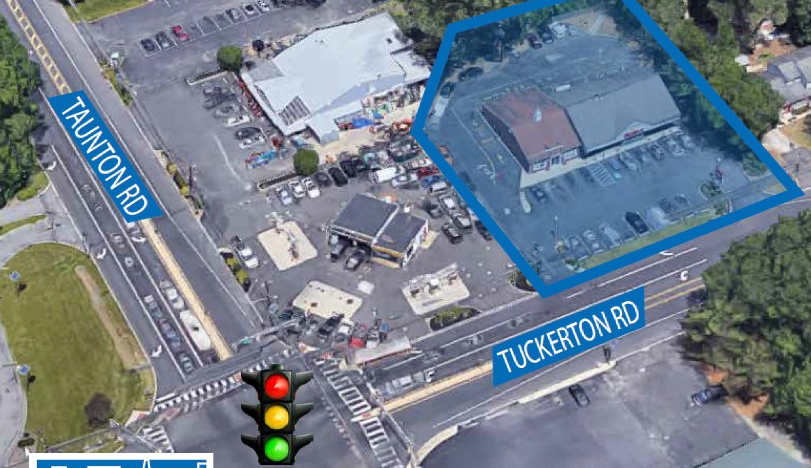
A retail convenience store location will soon become available for lease in Medford, New Jersey. The store is currently a high traffic Wawa location and situated next to an operating gas station/auto repair shop. The Wawa lease ends in Summer 2026. 

Corner service station on adjacent property drives a lot of consumer traffic to the area. The new leasee would rebrand the store with their own identity, but also inherit a prime spot with proven and established patronage. This presents a rare opportunity for a small business owner to step into a “big box” convenience store’s existing footprint and make the location their own. 

Fellow NJGCA members and outside interested parties are welcome to visit the location.

To learn more, please contact H. Abadzi with inquiries and interest.  

Contact: H. Abadzi
E: habadzi@gmail.com
P1: 703-731-7302
P2: 703-731-8580

Station for Sale

Location:
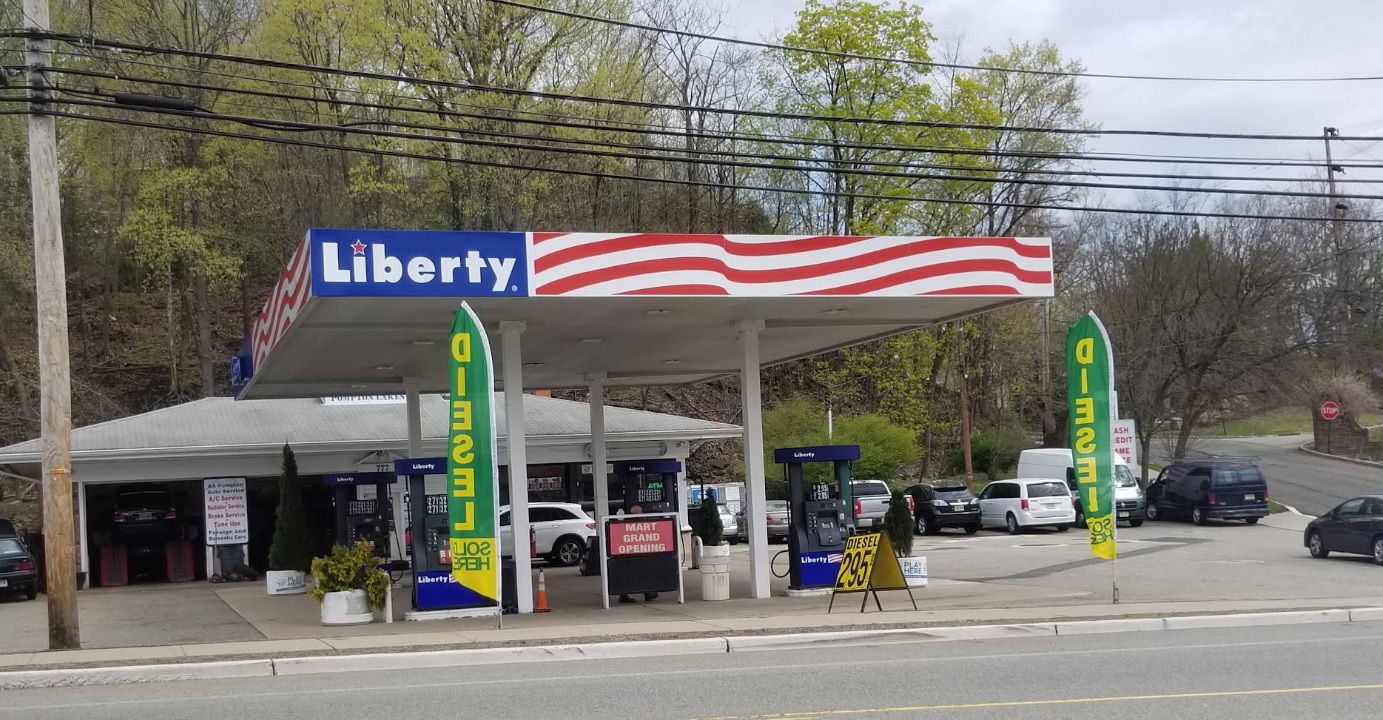
777 Hamburg Turnpike
Pompton Lakes, NJ 07442

Station features: 

  • Corner location with four 6,000 gallon tanks (double wall fiberglass)
  • Tanks were installed in 1998.
  • 70,000 gallons of gasoline sales per month.
  • Busy 2 Bay Garage, with small C-Store.

Interested in learning more? 

Contact Steve Hamparsumian with inquires! 
Cell: 201-832-5885 
Email: Steveabbcnj@gmail.com

IMG_0322.JPG

Rack Averages

Date Rack Avg Avg w Taxes Low Rack
12/11 178.01 $2.4131 168.88
12/12 177.15 $2.4045 168.60
12/15 175.12 $2.3842 167.29
12/16 171.13 $2.3443 161.36
12/17 172.24 $2.3554 163.44
Date Avg Retail Avg Margin Diesel Rack Avg
12/11 $2.97 0.54 228.74
12/12 $2.96 0.55 225.49
12/15 $2.94 0.54 223.85
12/16 $2.94 0.55 218.00
12/17 $2.93 0.58 220.47

**Rack prices have hit their lowest level since February 2021**

News Worth Knowing:

Member Benefit Partner (MBP) Spotlight: Ewing Oil & Liberty Fuel

Liberty Petroleum was founded in 2000 by three veteran mid-Atlantic distributors with a straightforward goal: to level the playing field for independent retailers like you. Today, distributors are flying the Liberty banner at more than 400 distinctly-branded Liberty retail locations across the country from NJ and Louisiana to Kansas and Idaho. 

We’re constantly monitoring market developments, strengthening our supplier relationships in key areas of the country, and using Liberty’s collective buying power to negotiate from a position of strength. This is especially true to lock in credit card rates that are substantially better than those offered by the major oil companies. 

Our favorable formula pricing is tied to market indexes and our goal is to give you the insight to make better decisions and increase profitability. We offer one of the lowest prices on premium in the industry, and we’re here to support your business so that you enjoy the freedom to compete. In addition to our own-branded Liberty Fuel, we also distribute Citgo branded products as well as commercial buying capability.

Contact: Tom Gennari Phone: 908-938-1110 Email: TGennari@ewingoil.com Website: www.ewingoil.com 

Our Road Warrior newsletter is brought to you by the following Member Benefit Partners:

New Jersey Gasoline, Convenience, Automotive Association
615 Hope Road, Bldg. 2, 1st Floor
Eatontown, New Jersey 07724


Phone: 732-256-9646
eMail: info@njgca.org

Written by Executive Director Eric Blomgren and Director of Member Services Nick De Palma


Posted

in

by

Tags: